 Save
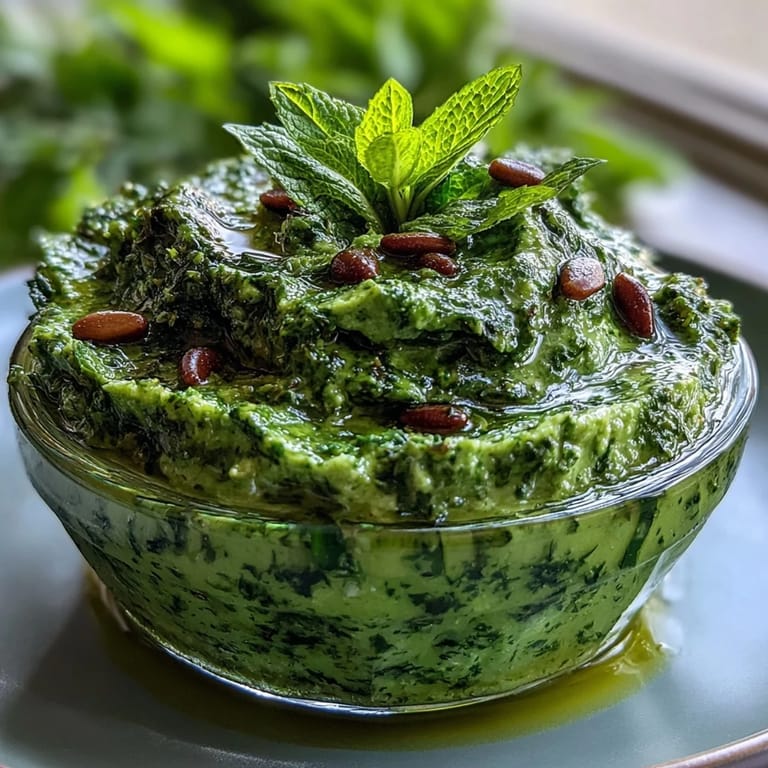
Save There's a particular moment in late spring when I realized dandelion greens aren't just weeds to pull from the garden—they're treasures hiding in plain sight. My neighbor casually mentioned she'd been making pesto from them, and something in the way she described that peppery, slightly bitter punch made me stop what I was doing and ask for her recipe. What followed was one of those kitchen experiments that felt like discovering a secret, a way to transform something overlooked into something vibrant and completely addictive.
I made this for a dinner party one Thursday evening, spreading it thick on toasted bread just as people arrived, and watched their eyebrows raise with that delightful surprise of encountering something unexpected. One guest asked what was in it with genuine curiosity, and when I said dandelion greens, she laughed—not dismissively, but with the kind of delight that comes from realizing you've been walking past good food your whole life. It became the thing people kept coming back to, not the main course.
Ingredients
- Fresh dandelion greens: The heart of this pesto, these leafy greens bring a peppery, mineral bite that basil alone could never achieve—look for tender young leaves if you can find them, as they're less aggressively bitter than mature ones.
- Fresh basil leaves: A gentle moderator that softens the dandelion's edge without erasing what makes it special, and completely optional if you want the full, uncompromising flavor.
- Pine nuts: Toast them yourself because the difference between toasted and raw is the difference between a good pesto and one that tastes like it's missing something you can't quite name.
- Parmesan cheese: Freshly grated is non-negotiable here—pre-grated versions have anti-caking agents that muddy the texture and make everything feel gritty.
- Garlic cloves: Two large ones is the sweet spot; they'll announce themselves in the best way, warming the other flavors without overwhelming them.
- Extra-virgin olive oil: This is where you splurge a little, because the quality makes itself known in every spoonful.
- Lemon juice: The final brightness that keeps everything from feeling too dense, a small amount that does massive work.
- Kosher salt and black pepper: Taste as you go—this is when your seasoning actually matters because you're not cooking it down.
Tired of Takeout? 🥡
Get 10 meals you can make faster than delivery arrives. Seriously.
One email. No spam. Unsubscribe anytime.
Instructions
- Toast your pine nuts:
- Dry skillet, medium heat, two to three minutes of gentle stirring until they release that warm, toasty fragrance and turn golden at the edges. Let them cool just enough to handle—warm nuts blend more smoothly than cold ones.
- Combine your greens and aromatics:
- Food processor gets the dandelion greens, basil if you're using it, garlic, those toasted nuts, and Parmesan all together, then pulse until everything is broken down into fine pieces. Don't overthink this part; you're not making a powder, just getting everything chopped small enough to blend together.
- Stream in your oil and lemon:
- With the processor running, pour the olive oil in slowly while it does its work, letting the friction and the liquid combine into something creamy. The gradual addition is key—it prevents the mixture from separating later.
- Taste and adjust:
- Season with salt and pepper, pulse once more, then take a spoon and actually taste it, really taste it. If it needs more brightness, a squeeze more lemon; if the garlic's too loud, a bit more salt will quiet it down.
- Transfer and store:
- Spoon into a jar or bowl, and it's ready to use right now or covered in the fridge for about a week if you have the restraint to wait.
 Save
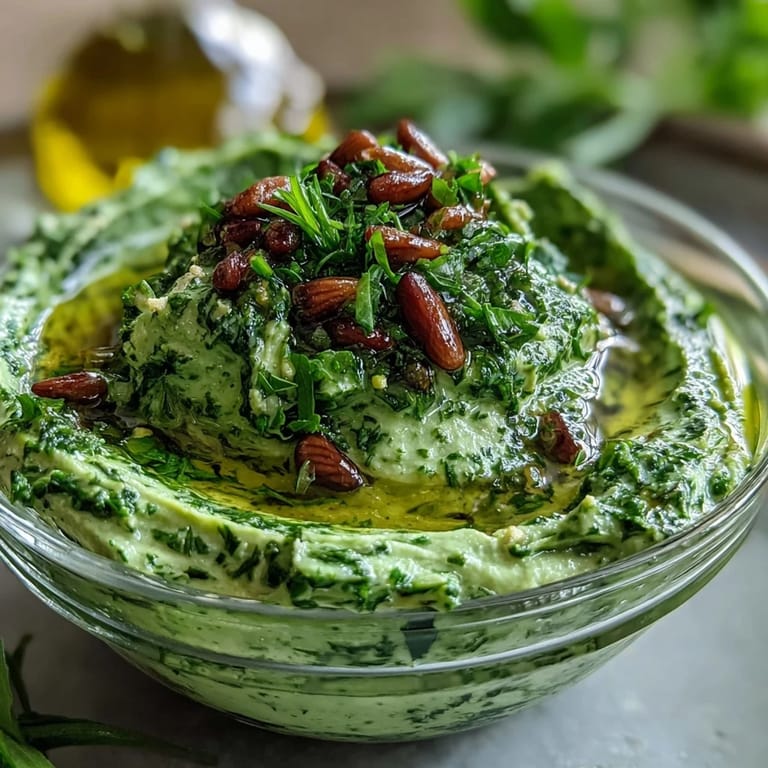
Save The moment this pesto became real for me was when my six-year-old daughter dipped a carrot stick into it, made a face at the bitterness, and then immediately dipped another one, chasing it with something sweet. It was such an honest moment—not everything has to be safe and mild to be worth eating, and sometimes the things that taste strange the first time become the things you crave.
Where Dandelion Pesto Belongs
This pesto is honestly too flexible for its own good—I've folded it into warm pasta where it coats everything in this green, peppery goodness; spread it on sourdough toast with a slice of tomato and fresh mozzarella; swirled it into ricotta as a vegetable dip; and even stirred a spoonful into roasted vegetables right at the end of cooking so it wilts slightly and clings to everything. The way it transforms depending on what it touches is part of what makes it special, so don't overthink the application.
Swaps and Substitutions That Actually Work
If pine nuts are too expensive or you simply don't have them, walnuts or almonds will do honest work here—they won't give you that same buttery richness, but they'll still bring nuttiness and body. For a vegan version, nutritional yeast is your friend, giving you that savory umami that Parmesan provides, or you can just skip the cheese altogether and add a pinch more salt to compensate. Some weeks when I'm trying to use up what's in the garden, I've mixed dandelion greens with equal parts arugula or even spinach if I want something less confrontational.
- Walnuts are earthier and less expensive; almonds are milder if you want the greens to stay the star.
- Nutritional yeast works surprisingly well for vegans, though the flavor profile shifts toward something more umami-forward.
- Mix and match greens based on what you have and how bold you want the final flavor to be.
Storing and Using It Up
This keeps in the refrigerator for about a week before it starts to oxidize and darken, and that's fine—the flavor doesn't suffer much, but if you want it to stay that vibrant green, press plastic wrap directly onto the surface so it's not exposed to air. You can also freeze it in ice cube trays and pull out what you need, though the texture will be a bit looser when it thaws. I've found that frozen cubes are perfect for melting into soups or stirred into grains, while fresh pesto is better for applications where you want that smooth, creamy finish.
 Save
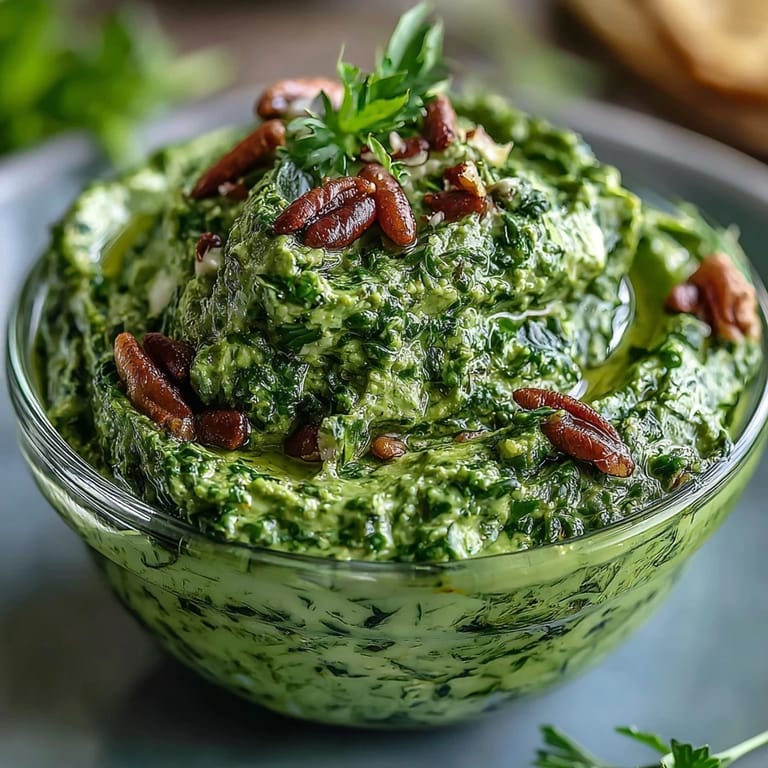
Save Making pesto from dandelion greens feels like you're in on a secret that's been hiding in backyards and wild spaces the whole time. Once you've tasted it, the world looks different.
Recipe Questions
- → Can I substitute pine nuts with other nuts?
Yes, walnuts or almonds work well as alternatives, offering a different but complementary nutty flavor.
- → How can I reduce the bitterness of dandelion greens?
Blanching the greens quickly in boiling water then cooling them helps mellow their natural bitterness.
- → Is it possible to make this without cheese?
Omitting cheese or using nutritional yeast provides a vegan-friendly option while maintaining savory depth.
- → What dishes pair well with this sauce?
It complements pasta, sandwiches, toasted bread, and roasted vegetables beautifully, enhancing their flavors.
- → How long can the sauce be stored?
Refrigerate covered for up to one week to maintain freshness and flavor intensity.